Discussion with the Young Mountain Guides Foundation Zermatt
Between Responsibility, Trust, and Lived Values
Mountaineering is far more than just reaching a summit. It stands for preparation, responsibility, and respectful interaction with people and nature. These are precisely the values conveyed by the Young Mountain Guides Foundation Zermatt (YMGF), which supports young people on their path to becoming mountain guides. For the current issue of our "Brotzeitung" (Bread Newspaper), we had the opportunity to speak with Patrice Biner. In the interview, he explains why Zermatt is a special training location, what values young mountaineers are taught, and why the mountain guide profession still plays an important role for the region today.

What is the basic idea behind the Young Mountain Guides Foundation Zermatt?
The foundation was established because, for a long time, not enough was being done to support aspiring mountain guides. Fewer and fewer young people were completing the profession. There was a conscious effort to counteract this trend and create new ways to support motivated individuals.
An important aspect here is also the financial side. Training to become a mountain guide is demanding and comes with costs. The foundation specifically supports this by funding preparatory courses and modules. This removes a barrier and facilitates access.
The support is provided in several stages. Young people are introduced to the mountains from an early age. Later, their knowledge is deepened before aspiring mountain guides are specifically prepared for their training. A large part of this work takes place within the framework of the JO-SAC (Youth Section of the Swiss Alpine Club).
What role does Zermatt play as a training location for young mountaineers?
Zermatt still holds a special position. The region is strongly connected to mountain guiding and offers ideal conditions for learning the profession, with its variety of routes, proximity to high alpine terrain, and a well-developed infrastructure.
At the same time, Zermatt is also a place where the profession can actually be practiced. There is enough work for mountain guides, which makes the training even more meaningful. The connection between training and practice is very direct here.
The foundation also supports this by creating good preparation opportunities and covering part of the financial burden. This allows participants to focus more on the training itself.

What values are central to the training of young people?
The focus is not on individual achievements, but on an attitude. This includes a connection to nature, self-reliance, and the ability to work in a team. Mountaineering rarely happens alone. The rope team only works if everyone can rely on each other.
An important part is also dealing with risk. Young people learn to assess situations and make conscious decisions. It's about developing strategies and taking responsibility.
At the same time, shared experiences play a big role. Often, groups of young people are out together, whether skiing or on tours. The focus here is not on performance, but on being together and consciously experiencing the mountains. Many of these experiences extend far beyond mountaineering.
What defines the mountain guide profession and what can it convey to guests?
A mountain guide conveys much more than just technique or the safe path to the summit. It's about accompanying people through situations that they often couldn't manage alone. This creates experiences that go beyond mere mountaineering. Moments that challenge, sometimes even push boundaries, whether physically or due to external conditions like weather or terrain.
The mountain guide maintains an overview and composure. They make decisions, provide safety, and build trust. Especially in challenging situations, a special bond develops between the guest and the mountain guide. These shared experiences often remain in memory for a long time and not infrequently lead to relationships that last for years.
Many guests come to Zermatt precisely for this reason. They are not just looking for a tour, but a genuine experience in the mountains. The mountain guide makes these experiences possible and creates access to nature that would not be possible without this guidance. It is precisely these moments that distinguish the profession and make it so important for the region.

What responsibility do experienced mountain guides have towards the next generation?
There is a clear responsibility. It's about preserving the profession in the long term and ensuring its quality. The mountain guide profession should continue to offer prospects in the future and still be perceived as a serious profession.
In other areas, we have seen how a profession can change when the market becomes very large and quality is not always prioritized, for example, with ski instructors. The aim is to avoid precisely that in mountain guiding.
Experienced mountain guides contribute to passing on knowledge and setting an example. This ensures that young people not only learn the profession but can also practice it long-term.
What do you wish for the future of mountaineering in Zermatt?
Mountaineering has changed in recent years. Guests travel differently, plan more spontaneously, and have more options than before. This also affects the work of mountain guides. Tours are less predictable in the long term, decisions are often made more last-minute, and the season is less consistent than before.
At the same time, this development also offers opportunities. Especially in summer, there are now more ways to experience the mountains. In addition to classic high-altitude tours, simpler adventure offerings have also emerged, such as glacier hikes, combined tours, or insights into alpine terrain for beginners. This makes mountaineering accessible to a wider audience.
For the future, the focus is primarily on young talent. It is important that enough young people find their way into the profession and that no gaps arise. The conditions in Zermatt are good, and there is enough work. The profession remains relevant for the region.

What should young people take with them from their time at the Young Mountain Guides Foundation for life?
Many of the values learned extend beyond mountaineering. Dealing with responsibility, working in a team, and the ability to make decisions are also important in everyday life.
Whether someone later works as a mountain guide, continues to go to the mountains privately, or chooses a completely different profession does not matter. The experiences from this time remain and accompany many throughout their lives.
More Stories about Mountaineering
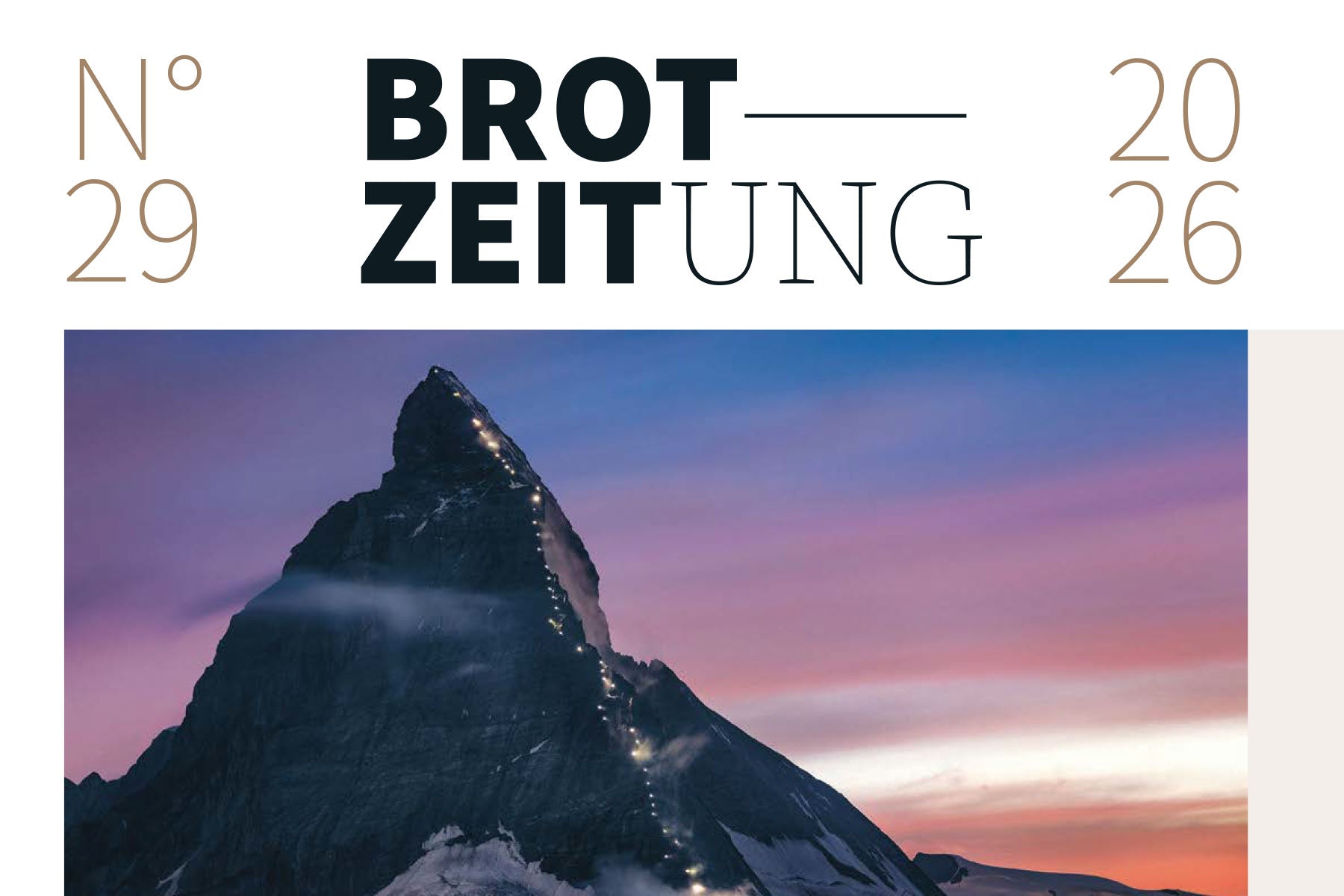
This interview is part of Brotzeitung No. 29, which focuses on "Zermatt and Mountaineering." In addition to the conversation with the Young Mountain Guides Foundation Zermatt, you'll find exciting insights into the creation of our mountain guide bread, Sandra and Philipp Fuchs' personal connection to the mountains, and other stories and facts about mountaineering in Zermatt.
The current Brotzeitung is available for free in all Fuchs bakery branches or can be read online.